Finnish jazz at 100: It all started with a ship from New York
Since a ship carrying musicians from New York docked in Helsinki a century ago, Finnish jazz has thrived with international influences. The anniversary is inspiring a slew of concerts and other events.
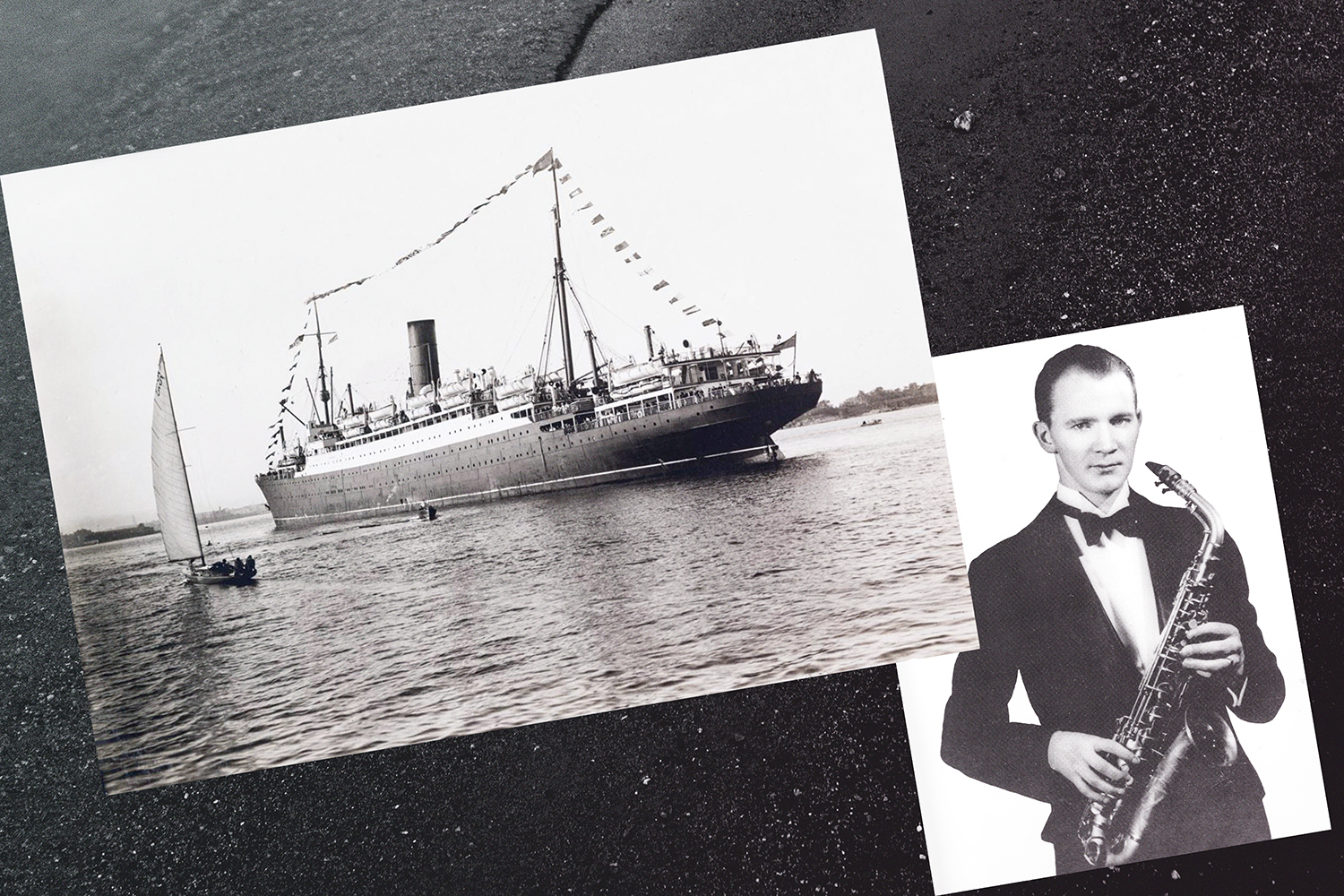
On June 4, 1926, the American steamship Andania docked in Helsinki, bringing Finnish-Americans émigrés to visit the old country – with an onboard jazz band that began playing gigs in the city, causing a sensation among local fans and musicians. Saxophonist, clarinettist and dandy Wilfred “Tommy” Tuomikoski stayed on, helping lay the foundation for Finnish jazz with bands such as Dallapé, which remains active today.
The Finnish Jazz Federation is celebrating the Andania anniversary with a series of concerts and other events (such as this showcase), plus a new jazz history website, to be unveiled on June 4.
The local scene has become much more globally oriented in recent decades, says the Federation’s chair, Jari Perkiömäki, a saxophonist and former head of the Sibelius Academy jazz department.
“When I started out in the late ‘70s, there were only a few active jazz musicians, though some of them were already internationally recognised. Since then, the number of active musicians and their stylistic diversity and internationalisation have grown constantly, partly due to the start of jazz education at the university level in 1983,” he explains.
Charles Gil, a French producer who’s been arranging tours and festivals in Finland and around Europe for 30 years, agrees, noting that Helsinki and Turku now attract jazz musicians from around the world – including New York.
“Thanks to the development of jazz education in Finland and across Europe, the community is bigger and more cosmopolitan nowadays, and there are more women active on the scene, too,” says Gil.
The Scene Changes
As a sign of that change, five women have won the Jazz Federation’s annual Yrjö Prize in recent years, after more than three decades of male winners.
The most recent honouree is singer-songwriter Aili Ikonen, who has released five solo albums and recorded with groups such as Rajaton, Jukka Perko Avara and the UMO Helsinki Jazz Orchestra.
“The scene has become more versatile in taking influences from different genres,” she says. “There are many rising talents and gifted young jazz musicians on the scene, and the level of skill is very high. It’s refreshing to see how freely the younger generation combines different styles of music.”
The first Yrjö Prize in 1967 went to saxophonist Eero Koivistoinen, followed a year later by saxophonist and flautist Juhani Aaltonen – both of whom remain active. Other winners include the brothers Pekka and Heikki Sarmanto, who, like the first two, have collaborated with major US jazz figures.
“Light and darkness, joy and sorrow”
“As in the other Nordic countries, jazz musicians here have mainly followed international stylistic developments in jazz, but some have used elements of Finnish folk or classical in their music, especially from the ‘60s and ’70s on,” says Perkiömäki.
Two other Yrjö-winning saxophonists have earned international acclaim with long-running cross-genre groups: Sakari Kukko with the global-fusion Piirpauke and Tapani Rinne with the electronic RinneRadio, while prizewinning pianist Iiro Rantala draws on classical influences.
Drummer, composer, and bandleader Edward Vesala is the only person to receive the prize twice. He too made a splash abroad with his daring free jazz albums for the ECM label, featuring his partner Iro Haarla as pianist, harpist, composer, and arranger.
Since he died in 1999, she has gone on to become a towering figure in her own right, releasing her own albums on ECM and winning multiple Emma (Finnish Grammy) awards – as well as an Yrjö.
“Haarla cultivates one of the most distinctive voices on the Finnish scene. She defines her musical path as an interaction between extremes: light and darkness, calmness and storm, joy and sorrow,” says Gil. “Among other outstanding voices, you find saxophonist Mikko Innanen, who has a retro-futuristic approach with no hierarchy between swing and avant-garde. Meanwhile, saxophonist Linda Fredriksson and trumpeter Verneri Pohjola use their voices like singer-songwriters.”
Festival fever
The Finnish jazz scene is also observing other anniversaries. This summer marks 60 years since the founding of the Pori Jazz Festival, one of Europe’s oldest jazz festivals – though it includes many other genres. Other internationally acclaimed festivals include Espoo’s April Jazz, which is marking its 40th birthday, as well as Tampere Jazz Happening and Helsinki’s We Jazz, both held each autumn.
And now celebrating its 50th anniversary season is the UMO Helsinki Jazz Orchestra, co-founded by Heikki Sarmanto, which has been professional (and all-male) since 1984. The big band has toured Europe and North America, working with jazz luminaries such as Dizzy Gillespie, Dexter Gordon, McCoy Tyner and Maria Schneider, earning a Grammy nomination for a recording with Thad Jones & Mel Lewis.
Another key date is 2003, when the Five Corners Quintet was founded in Helsinki, kicking off a fresh new wave of Finnish jazz.
Starting as a dancefloor-oriented studio project, 5CQ grew into a crowd-pleasing soul-jazz band that recorded with American vocal legend Mark Murphy and toured Europe and Japan until 2010.
Its members, including saxophonist Timo Lassy and trumpeter Jukka Eskola, have all become major figures in the blossoming Helsinki scene, which attracts hip young crowds to gigs and jam sessions nearly every night.
The high-energy quintet reunited last year and is playing a series of special centenary shows, including one in Helsinki just before the 100th birthday. Don’t miss the boat!